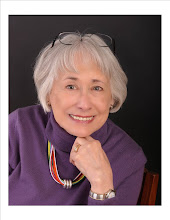
Come see me!
April 26 (Thursday), 2007, 6:30-8:30 PM Chloe Park Elementary School
1700 Palisade Blvd., Dupont, WA
3-26-07-Today, I've been thinking about a chapter I wrote in A Three-Turtle Summer. Ya'll remember it's just fiction, except for the parts that are true...
8. Sako’s Nightmare
I'm having trouble getting the indents to stick, so I've added some color so you'll know where the next paragraph starts...
Even though Sako’s kitchen door was open, she didn’t hear the goings on at Grace’s. She was busy getting her two boys bathed and put to bed. In better times, when a young woman had more choices, people might have questioned the wisdom of a young girl marrying a man who already had two children, especially when one of them was bedridden. But Sako looked at her charges as a sacred trust—victims of a war they had no part in. How strange that they were caught in the vice of a decision made by a president hundreds of miles away.
When President Roosevelt signed executive order #9066, it destroyed lives far beyond those it was meant to affect. The net that Roosevelt, Herbert Hoover, General John De Witt, and others threw out over the land caught not only Japanese, Germans, and Italians who were considered to be potential threats to national security, but others who were not even on the subversive list. It was like a salmon net cast out over deep waters that caught a hundred other unwanted species of fish in its seine.
This time, the net brought in a whole array of victims: American wives of immigrants who had their citizenship stripped away by the Cable Act of 1916: old women who had lost sons when the Arizona went down and then were forced to move to internment camps. German and Italian men who were separated from their families and scattered in camps all over the country, and children, like Sergeant Hill’s, whose mother died from fear, even though she wasn’t meant to be caught in the net at all.
Roosevelt.
Hoover.
De Witt.
Sako always looked through the paper when Sergeant Hill wasn’t around, so he wouldn’t see her bite her lip and twist her hair tightly around her finger as she skimmed every news story for their names. She looked for numbers too. Numbers like 9066 and 1916. Any number that could mean future trouble for her or her family. She didn’t believe for a minute that it could never happen again.
Elizabeth Hill, Sergeant Hill’s first wife, had become paralyzed with fear when she read about the internments on the front page of her hometown newspaper. She had an Italian grandmother on one side of her family and a German grandfather on the other. Although they’d held citizenship papers for years, Elizabeth became obsessed with the fear that they would be rounded up and stripped of their citizenship. She even feared for herself.
She worried so much about being labeled an enemy alien that she began to drink. Next came Elizabeth’s nightmares, Sergeant Hill had told Sako. Night after night, she dreamed about government men who took her away in the middle of the night, never to see her boys again. Over and over in her dreams, she awoke to men in dark suits with their hats pulled low over their foreheads who dragged her out of her home by her foot, her nightgown trailing behind her. One G-man always had her Philco radio tucked underneath his arm, and said it was proof that she was a spy.
Sergeant Hill tried to reassure her that she was safe, and that the stories she heard about government men who broke down doors in the middle of the night and took away men and their short-wave radios were largely exaggerated. It wouldn’t happen to her; all of her relatives had been citizens for years.
One night, government men broke into the house across the street, and the Italian man who’d lived there with his family for years was hauled off. Weeks later, his family got a letter postmarked Ft. Missoula, where an internment camp for Italians had been set up.
Elizabeth was on the edge. After she saw in the headlines that more citizens had been rounded up, the weeks and weeks of no sleep and too much booze drove Elizabeth to leave her boys and drive her car off a cliff. Soon after that, Sergeant Hill was ordered to report to a new assignment in Arizona. The assignment turned out to be the Japanese internment camp at Poston.
For the Army, the tenderhearted sergeant was the worst person they could have sent to Poston. For the captives, he was a blessing. During his assignment, he adopted several Japanese families, one of them Sako’s. He made each one as comfortable as possible and earned a place in their hearts forever.
Just before the camp closed in 1946, he and Sako knew they were in love and were married in front of the whole camp. Sergeant Hill, a small man of thirty-six years with dark hair and thick eyeglasses, wore his uniform. Sako had a real wedding gown sewn from white satin with seed pearls around the neck, a purchase made from one of the Sear’s catalogs that the interned community shared. In fact, her trousseau and the clothes for the entire wedding party came from the mail order catalog. It was the only way the internees could shop.
And now, each night, as Sako tucked the two boys into bed, she would say a prayer for Elizabeth, Sergeant Hill, and the two boys she guarded with her life. On her way out of their room, she always put her hands together and made a tiny bow in front of the little gold frame that held Elizabeth’s picture that hung on the wall near the light switch. “Your children are safe for the night,” she would whisper, “may God give you peace.”
In the hottest part of the day, when the women sat behind their makeshift quarters in the only available shade in the neighborhood, Sako could count at least three other women who must have felt Elizabeth’s fear: two German women, and one Italian, but none of them ever mentioned Executive Order #9066, or the Cable Act of 1916. It was a secret shame that made them feel helpless. Made them feel like second class citizens.
Besides, who knew who could be trusted? Best not to talk about it. It was easier for Sako to talk about what had happened with someone who hadn’t been there. Someone who didn’t come to the conversation with a head full of memories and a heart full of sadness. Maybe someone who had her own problems, like Grace.
Not that the subject often came up. But one time, when Sako sat in the shade with the other women, one of the newer, uppity wives managed to get Sako riled up.
“Where were you when the atom bombs hit, Sako?” she asked.
“I was in Poston,” Sako answered.
“Is that near Hiroshima?” the young woman asked.
“Poston was an internment camp in Arizona. Our government invited a bunch of us to stay there during the war. Where were you, Palm Springs?”
“Oh,” the young wife stammered, still confused, “I thought you were Japanese.”
“I’m as American as you are,” Sako snapped, “Maybe more. I’m American enough to have seen the dirty side of freedom—American enough to have seen my mother lose her home, her heart, and maybe her soul.” Sako became more and more upset and let all of her anger and hurt out. “American enough to have seen my father lose the straightness in his back when he saw our government put his wife and children behind barbed wire.” Tears ran down Sako’s face, but she couldn’t stop, she had to go on, “American enough to have seen jealous white farmers walk away with our land. American enough to have seen strangers come into our home, paw through our personal possessions, and take everything we had worked for.” Sako stopped to breathe and then spat out one final sentence, “Oh, don’t you dare treat me as if I don’t belong here.”
The woman ran home, but Sako stayed in the shade and drank her iced tea as if she’d just made a toast to newlyweds. The rest of the women, especially the German and Italian ones who had war horror stories of their own, were quiet. Sako spoke for all of them and had said what they had been unable to say. She thought she could see a grin peeking around the edge of their lips even though their eyes were tearing up.
“Good for you, Sako. You got her told!” a woman finally said after she caught her breath.
Unlike some of the other Japanese who were interned, Sako was smart enough to grasp the wider picture. She didn’t have to go to college to know the history of fear, jealousy, and hate. From her network of fellow former internees scattered around the country, she had learned all she needed to know about how Italian fishermen had their boats confiscated in California without any payment or apologies. She’d also read about the Japanese-Peruvian fishermen, who were snatched off the coast of Peru and, after the war, dumped unceremoniously in Japan, a country that hadn’t been theirs for generations.
Fortunately, because she was young and in love, Sako was usually more positive about her circumstances than older past internees. Besides, what was done, was done.
Her problems now were the heat in her quarters, the red dust, the snakes, the scorpions—and that creepy black widow spider that was weaving a web in the corner of her back porch, right above her mop bucket.
 ©Joyce Stevens, 2006